
Transforming African Small-Scale FarmersIssue 4 · Week of 26 October 2026

From Farm Support to Market: Building a Stronger Dairy Future

This week’s issue looks at what it takes to turn support into lasting progress for small-scale farmers: infrastructure that helps produce reach buyers, practical skills, reliable records and partnerships that fit the farm’s needs. For South African dairy farmers and the people who work with them across the supply chain, the lessons are timely. Eastern Cape applications for 2027/28 support close on 30 October 2026, while Land Bank’s Blended Finance Scheme remains closed to new applicants. Plan around confirmed requirements, costs and realistic financing—not an assumed reopening or guaranteed approval.

In this issue

  1. 1From Packhouse to Buyer: Practical Routes for African Small-Scale Farmers
  2. 2Beyond the Grant: Building the Skills and Partnerships That Help Farmers Grow

Listen to the MaxMedia podcast · New episodes every week

Article 1

From Packhouse to Buyer: Practical Routes for African Small-Scale Farmers

A new packhouse in North West shows how infrastructure can bring produce closer to market—but farmers still need finance, records, skills and buyers. Here are practical routes, from an Eastern Cape funding deadline to dairy and market-linkage programmes elsewhere in Africa.

Key points

A packhouse can help turn a harvest into market-ready produce, but it cannot by itself guarantee a sale. For small-scale farmers, the practical opportunity is to connect infrastructure, production planning, finance and a buyer from the outset. In Mogogelo Village, Moretele, North West, farmers now have a new facility designed to handle, grade and prepare produce for market. It is a concrete example of what market access infrastructure can do—and a reminder to plan beyond the farm gate.

Use shared infrastructure to meet market requirements

On 20 October, North West handed over the Cassper Agri-Life Vegetable Packhouse to farmers in Mogogelo. Food For Mzansi reports that the facility includes mobile cold rooms, production tunnels, a borehole and a generator. Thapelo Madumo is among the farmers receiving infrastructure and extension support. It is the province’s third new agricultural processing facility, following the MOR Farming and Jantjies Boerdery Lucerne packhouses.

Handling, grading and preparing produce can help farmers supply buyers more consistently and protect quality, especially where cold storage and reliable water or power are constraints. But farmers should establish which grades, volumes, delivery schedules and food-safety requirements a prospective buyer expects before scaling production. The house guidance is to link any investment to a costed production plan and a dependable route to market; a grant or loan does not organise deliveries or secure a customer for you.

Build a market plan around the support available now

In the Eastern Cape, emerging farmers can apply for the province’s 2027/28 Farmer Support Programme until 30 October 2026. Farmers Weekly reports that support categories include livestock, production inputs and infrastructure. Depending on the category, applicants may need documents such as a business plan, bank statements or proof of land access. Applications may cover more than one category, subject to programme rules and available budgets.

With the deadline only days away, check the category requirements directly and assemble the relevant evidence before submitting. Make the proposal specific: identify the farm’s constraint, explain what the requested support will enable, and show how production will be marketed. Keep production and sales records, bring tax compliance up to date and set out operating costs and a credible repayment path where borrowing is involved. These are useful preparation steps whether the application is for inputs, infrastructure or livestock.

Do not plan around funding that is not open

The Land Bank will not reopen its Blended Finance Scheme to new applicants despite an additional R500 million government allocation, Farmers Weekly reports. The allocation is intended for applications already received, with qualifying transactions awaiting disbursement or finalisation prioritised; approval and funding are not guaranteed. The scheme combines grant and loan finance for historically disadvantaged farmers, but the latest position means new applicants should not build an immediate investment plan around it.

Instead, verify the status of any funding route before committing to costs or assuming cash will arrive. For a future application, specify whether the real bottleneck is land access, infrastructure, livestock, equipment or working capital, and show how addressing it will support production and repayment. MaxMedia’s previous guidance stresses that finance should be matched to the farm’s actual constraint and connected to sales evidence and a buyer plan.

Partnerships can bridge the gaps between production and sale

At an Agda conference in Boksburg, speakers called for stronger partnerships among farmers, financiers, insurers, agribusinesses and government to commercialise emerging farmers. Agda board chair Mathews Phosa cited South African agricultural exports of about US$15.1 billion in 2025, while identifying capital, risk and market access as linked barriers. Conventional lending requirements—such as title deeds, credit histories and audited records—can exclude emerging farmers.

That makes cooperation and well-documented business cases especially important. A farmer group or cooperative can help coordinate volumes and deliveries where buyers need consistent supply, while partnerships can connect producers with technical support and market information. The examples in our reference material emphasise that organising producers can improve bargaining and delivery, and that finance, production skills and market access have to work together rather than as separate interventions.

African programmes show what a fuller route can look like

Programmes elsewhere illustrate the value of combining training, services and market links. In Kenya, ADM Cares and Concern Worldwide US expanded the LEAF programme in Tana River County to reach 17,500 smallholder farmers. Its fourth phase combines technical training, improved access to inputs and stronger market connections; the organisations expect indirect benefits for more than 100,000 people. They report that some participants have moved from programme support to sustaining and growing their businesses independently.

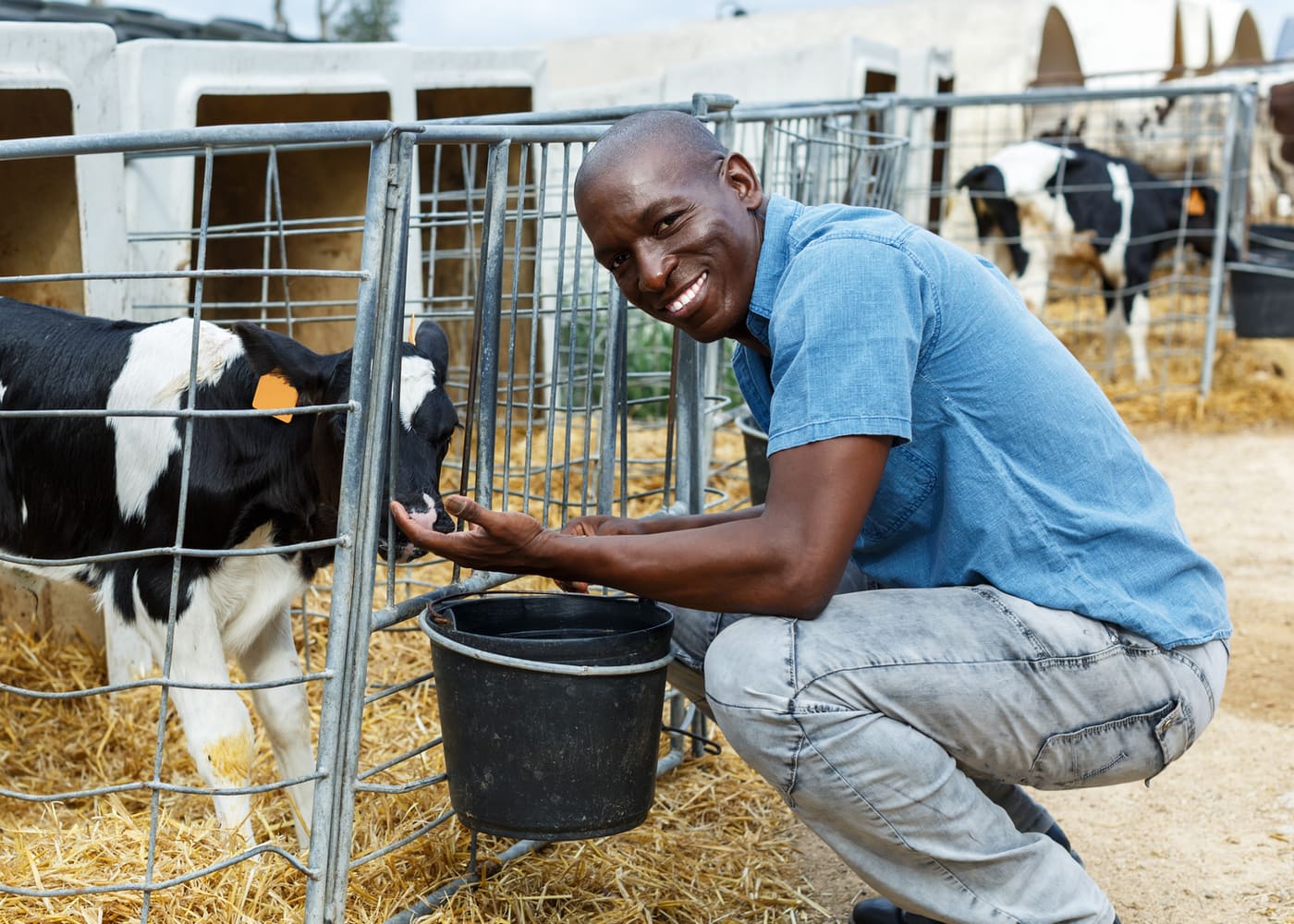
Nigeria’s six-year Advancing Local Dairy Development programme linked more than 63,000 smallholder farmers to formal dairy supply chains and enabled delivery of over 15 million litres of fresh milk to processors. It also reported more than ₦6 billion in sales, veterinary services for nearly 84,000 cows and good-dairy-practice training for over 61,000 farmers. Farmers were organised into 2,663 self-help groups and 234 registered cooperatives. These figures underline that dairy market access depends on more than having animals: animal health, skills, organisation and a processor connection all matter.

For farmers considering a commercial step, the practical sequence is clear: identify a buyer and its requirements; cost the production and delivery plan; assemble the records and land-access evidence relevant to finance; and seek extension, training or group support to close capability gaps. In South Africa, Mogogelo’s packhouse provides one piece of that chain. The work now is to make sure production, quality and reliable supply meet a real market.

Read on the website →

Article 2

Beyond the Grant: Building the Skills and Partnerships That Help Farmers Grow

Funding and infrastructure matter, but emerging farmers also need practical skills, trusted partners and a plan for managing risk. From Kenya’s LEAF programme to South Africa’s application deadlines, these examples show where to start.

Key points

For an emerging farmer, the next step may not be another asset. It may be learning to cost a production cycle, keeping records a lender can assess, finding technical support or making a workable plan with a commercial partner. These capabilities help turn inputs and funding into a business that can keep producing—and give farmers a stronger footing when applying for support.

Skills are part of the investment

South Africa’s support system recognises that development involves more than handing over equipment. Government says smallholder mechanisms can include inputs, mechanisation, production infrastructure, training and links to agricultural markets, with the aim of helping subsistence producers participate in value chains where viable. The 2025 General Household Survey found that 15.8 million people experienced inadequate to severely inadequate food access, a reminder of why productive, resilient local farming matters. [South African Government News Agency](https://www.sanews.gov.za/features-south-africa/food-security-bridging-gap-between-availability-and-access) describes this as bridging availability and access; for a farmer, it means building the capacity to produce reliably and manage a business, not simply increasing output.

Use the application window to sharpen the plan

There is a near-term route for eligible farmers in the Eastern Cape: applications for the province’s 2027/28 Farmer Support Programme are open until 30 October 2026. According to *Farmer’s Weekly*, support categories include livestock, production inputs and infrastructure. Depending on the category, applicants may need documents such as a business plan, bank statements or proof of land access; more than one category may be included, subject to programme conditions and available budgets. Check the relevant category requirements and submit before the deadline rather than assuming that one document set fits every request.

Make the case specific: identify the constraint, price the proposed response and explain how it will improve production or business performance. MaxMedia’s practical guidance is to keep production and sales records, bring tax compliance up to date, cost both the investment and its operating needs, and show a realistic repayment path where borrowing is involved. A funding application is stronger when it explains what the farm will do with support and how the business will sustain the change.

Know what is—and is not—available

Do not build a plan around a funding window that is closed. On 20 October, *Farmer’s Weekly* reported that Land Bank would not reopen its Blended Finance Scheme to new applicants despite an additional R500 million government allocation. The allocation is intended for applications already received, prioritising qualifying transactions awaiting disbursement or finalisation; approval and funding are not guaranteed. The scheme combines grant and loan finance for historically disadvantaged farmers, but the latest allocation is not a fresh invitation to apply.

Farmers can use the pause to strengthen records, verify land access and refine an investment proposal, while checking directly with the relevant programme for current intake information. This avoids treating a public funding announcement as money already secured. MaxMedia’s earlier guidance stresses that a finance request should match the farm’s actual bottleneck and be linked to a credible production and repayment plan.

Partnerships can share the work and the risk

At an Agda conference in Boksburg, speakers called for stronger partnerships among farmers, financiers, insurers, agribusinesses and government to commercialise emerging farmers. Agda board chair Mathews Phosa pointed to South African agricultural exports of about US$15.1 billion in 2025, while identifying capital, risk and market access as connected barriers. Conventional lending requirements—including title deeds, credit histories and audited records—can exclude emerging farmers. *Food For Mzansi* reported the call for partners to work together on pathways into commercial agriculture.

For farmers, this points to practical questions to raise with a prospective partner: what technical advice is available, what records or production standards are expected, how will risk be handled, and what is the route from production to payment? Cooperation and aggregation can help where they improve bargaining or make deliveries more reliable, but partnership should be defined in clear responsibilities and realistic business terms.

Training works best when it leads to independence

Examples elsewhere on the continent show different ways to build capability. In Kenya, ADM Cares and Concern Worldwide US expanded the LEAF programme in Tana River County to reach 17,500 smallholder farmers. Its fourth phase combines technical training, improved access to inputs and stronger market connections, and is expected to benefit more than 100,000 people indirectly. The organisations say some participants have moved from programme assistance to sustaining and growing their businesses independently. That transition—from receiving support to managing a viable operation—is a useful measure of whether training is taking hold.

In Burkina Faso, the African Development Bank-reported PADEJ-MR project paired incubation and training with work placements and business-plan financing. The 2019–2026 project had a total investment of €13.62 million, 90% financed by an African Development Fund grant. One dairy entrepreneur, Jacob Dakio, grew his herd from two cows to ten. The example links skills development to practical experience and finance, rather than treating any one of them as a complete solution. [African Development Bank-reported account via AllAfrica](https://allafrica.com/stories/202610210297.html)

A practical checklist for the next step

Whether applying for provincial support, preparing for future finance or discussing a partnership, farmers can begin with four tasks: document production and sales; identify the farm’s most urgent constraint; cost the investment and ongoing operating requirements; and spell out the training, technical assistance or commercial relationship needed to make it work. Where relevant, confirm land access and gather the category-specific supporting documents before applying. These basics do not guarantee funding or a buyer, but they make the proposal more concrete—and help farmers judge whether a proposed intervention fits the business they are trying to build.

Read on the website →