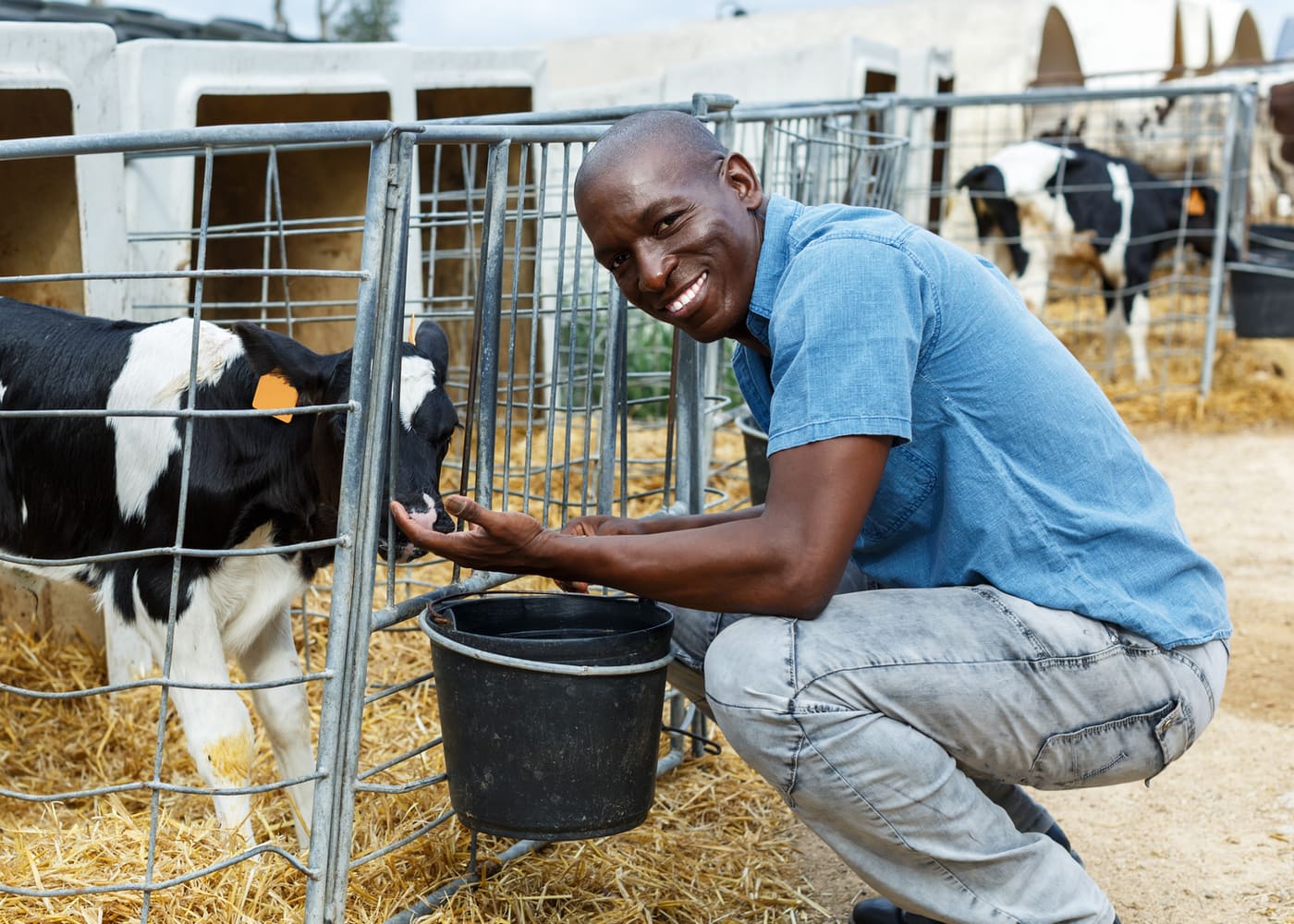

Transforming African Small-Scale FarmersIssue 2 · Week of 12 October 2026

Building Dairy Businesses That Can Last

This week’s issue looks beyond access to land and finance to the practical foundations that help emerging farmers build durable commercial operations. For South African dairy producers and their partners, that means matching investment to a costed plan, protecting young stock, securing feed and infrastructure, and making sure training addresses real farm needs. It also means testing whether a route to market delivers on volumes, quality, logistics and payment. Across the initiatives featured here, the central lesson is clear: support works best when the pieces connect—and when farmers can measure whether they are moving toward a dependable business.

In this issue

  1. 1From Farm Finance to a Reliable Buyer: Practical Routes for African Smallholders
  2. 2The Missing Link in Farmer Growth: Protecting the Herd That Builds the Business
  3. 3From Farm Gate to Buyer: Building Market Routes That Scale
  4. 4From Training to Commercial Readiness: What Emerging Farmers Need Next
  5. 5From Land Access to Lasting Farm Businesses: Build the Enablers Around the Farm

Listen to the MaxMedia podcast · New episodes every week

Article 1

From Farm Finance to a Reliable Buyer: Practical Routes for African Smallholders

South Africa’s Blended Finance Scheme can support more than land purchase—but a viable application and a dependable route to market matter just as much. New mentorship, soy-market and dairy initiatives offer practical lessons for farmers building commercial businesses.

Key points

A grant or loan can help you acquire land, equipment or livestock, but it will not by itself secure a buyer, organise deliveries or make repayments affordable. For small-scale farmers, the practical route to growth is to link finance to a costed production plan, skills support and a market that can absorb what the farm produces. South Africa’s Blended Finance Scheme and new mentorship activity offer one entry point; developments in Ghana and Nigeria show why aggregation, processing and reliable supply chains belong in the plan from the start.

Match finance to the farm’s actual bottleneck

The Land Bank–Department of Agriculture Blended Finance Scheme combines government grants with loan finance. During an 8 October visit to Redlands Dairy Farm, President Cyril Ramaphosa described the scheme, launched in 2022 as a ten-year intervention for black producers. It can support farm acquisition, infrastructure, livestock, dairy equipment, mechanisation and working capital, according to the President’s address. Those options make it important to identify precisely what is constraining the business: a lack of productive assets, inadequate infrastructure, or a cash gap between production and payment.

Before approaching a lender, set out what the proposed investment will enable, what it will cost to operate and how the resulting production will be sold. MaxMedia’s guidance is to prepare records of production and sales, ensure tax compliance, and present a credible business case with a repayment path. A funding announcement is not the same as money in an account; confirm application conditions and availability with Land Bank before building a seasonal plan around finance.

Use mentorship to turn capital into capability

Ramaphosa named Farmers for Africa, Grain SA’s Phahama Grain Phakama and the Citrus Growers Association’s Vision 260 as formal mentorship initiatives for emerging farmers. Vision 260 aims for black farmers to capture a notable share of exports by 2032. The value of these programmes is the practical knowledge transfer from established commercial producers—not simply access to a name or a meeting.

Agriculture Minister Willie Aucamp likewise identified Phahama Grain Phakama as supporting developing grain farmers through mentorship, training and technical support. Speaking at its grain and livestock conference in Bothaville, he called for partnerships that provide shared equipment, contract production, storage and market access. A farmer considering a programme can ask what support is available locally, who provides technical advice, how often it is delivered and whether the partnership connects production to a buyer. Mentorship is most useful when it responds to farm-level decisions and continues beyond the initial investment.

Build the buyer into the production plan

Ghana offers a current example of a buyer-facing approach. Norway has awarded €3 million to the three-year Making Agrifood Markets Accessible for Soy Farmers programme, targeting 10,000 smallholder farmers. The programme works through SME-led sourcing and processing models, with IDH, AGRA, IITA and YARA as partners, and aims to create more than 20,750 value-chain jobs. These are programme targets, not outcomes already achieved. Its design nevertheless highlights a practical question for farmers and groups: who will source the crop, process it and communicate quality and delivery requirements?

MaxMedia’s analysis of smallholder markets stresses that a producer group’s usefulness depends on what it does in practice: aggregation, clear quality standards, transparent records of volumes and payments, and a buyer able to take supply. In Ghana, farmers can seek participation information through programme partners and local producer organisations, including requirements and extension support in their area.

Dairy growth depends on feed, collection and continuity

For dairy farmers, production is only one link in the commercial chain. In Nigeria, Kaduna State says it will sustain gains under the five-year Advancing Local Dairy Development in Nigeria programme by improving year-round livestock feed production. Funded by the Gates Foundation and implemented by Sahel Consulting with state governments and dairy processors, the programme is also associated with pasture development and grazing-reserve revitalisation. Kaduna cited a state ranch company developing 110 hectares of a 600-hectare site.

The wider ALDDN experience shows why farmer organisation and sales measures matter alongside participation: in Plateau State, programme reporting cited 11,175 farmers enrolled, 426 self-help groups organised into 67 cooperatives and more than 2.25 million litres of fresh milk supplied, worth over N903.9 million. These are distinct state-level figures, not a forecast for every dairy project. For a farmer exploring dairy, ask who collects milk, what quality and delivery rules apply, when payment arrives, and whether feed and infrastructure can support supply throughout the year. South African dairy guidance makes the same core point: establishing a dairy business is expensive and needs long-term partners, finance, training and practical support.

A practical first move

Map the farm’s constraint before applying for support: finance, land access, water or other infrastructure, technical skills, aggregation or a dependable buyer. Then assemble production and sales records, cost the proposed investment and identify the organisation that can address that specific gap. Ask a mentor or lender what advice accompanies the capital; ask a cooperative or buyer about volumes, quality, collection and payment; and test whether the investment still works under realistic production assumptions. The aim is not simply to produce more, but to build a repeatable route from farm output to income.

Article 2

The Missing Link in Farmer Growth: Protecting the Herd That Builds the Business

For emerging livestock farmers, every young animal retained can shape the route to commercial scale. A South African predation-management course shows how practical skills, alongside tailored finance and infrastructure, can turn herd protection into a development strategy—with lessons for dairy projects in Nigeria.

Key points

A young animal lost to predators is more than a setback: it can delay the herd growth an emerging farmer needs to reach commercial scale. That is why a recent training session in Robert Sobukwe Town offers a practical lesson for small-scale livestock producers: protect the animals you already have while building the skills and systems to expand. The route to growth is not simply more land or a loan. It begins with keeping productive assets alive, then matching investment to the farm’s real constraints.

Make herd protection part of the business plan

On 30 September, the Mohair Empowerment Trust hosted predation-management training focused on identifying problem animals, understanding causes of livestock losses and choosing management methods. Farmers Weekly reported that the course emphasised protecting young stock and retaining replacement animals—steps that help emerging farmers build herds and progress towards commercial production. The practical starting point for a farmer is to record losses and identify when and where they occur, then seek locally relevant advice on prevention and management. That makes training answer a specific farm problem, rather than remain a general credential.

The lesson extends beyond mohair. Livestock numbers and replacement animals underpin future production, while avoidable losses can undermine the economics of any expansion plan. MaxMedia’s practical approach to farmer development is to map the constraint before seeking support: it may be skills, infrastructure, working capital or a reliable route to market, and the answer differs by farm.

Finance should fit the asset and the operating plan

For black producers in South Africa, the Blended Finance Scheme combines government grants with loan finance. During his 8 October visit to Redlands Dairy Farm, President Cyril Ramaphosa described the scheme—launched in 2022 as a ten-year intervention—as able to support farm acquisition, infrastructure, livestock, dairy equipment, mechanisation and working capital. This is a broad set of eligible investment needs, but it does not mean every project or applicant will receive funding. A farmer considering an application should define the particular bottleneck, cost the investment and show how it supports productive capacity and repayment.

That discipline matters especially for livestock and dairy. A dairy operation is expensive to establish; finance is more useful when combined with training, practical support and long-term partners, rather than treated as a standalone solution. Before committing to equipment or additional animals, test the projected production gains against feed, labour, maintenance and repayment costs. Infrastructure should fit the farm’s economics, not rely on optimistic yields.

Nigeria’s dairy lesson: feed has to last through the year

South Africa’s livestock-development challenge also has a regional parallel. Kaduna State says it will sustain gains under Nigeria’s five-year Advancing Local Dairy Development in Nigeria programme by improving year-round livestock feed production. The programme is funded by the Gates Foundation and implemented by Sahel Consulting with state governments and dairy processors. Kaduna has cited pasture development and grazing-reserve revitalisation; a state ranch company is developing 110 hectares of a 600-hectare site, according to Dairy Business MEA.

The emphasis on feed points to a concrete planning question for dairy farmers: how will animals be fed through the full production cycle, including periods when pasture or other feed is less available? Kaduna’s stated actions are programme developments, not a guarantee of outcomes for every participant. But they illustrate why livestock expansion should be planned alongside feed and infrastructure, rather than counted only in head of cattle. MaxMedia’s dairy reference material likewise stresses that economic viability underpins a farm’s ability to sustain operations and invest in animal welfare.

Turn training into a repeatable management routine

A one-day course can help identify methods, but lasting improvement depends on applying them consistently. Farmers can use a simple record of stock numbers, births, replacements and losses to review whether management changes are working. When approaching a support organisation, bring those records and ask what technical follow-up is available, what infrastructure is essential and how progress will be measured. The Mohair Empowerment Trust’s focus on retaining replacement stock makes the purpose clear: herd-building is a production strategy, not merely a matter of animal numbers.

The broader lesson is to join up the farm’s needs. Identify the loss or constraint; seek relevant training; cost the response; and pursue finance or partnerships that match the plan. South Africa’s blended finance can support eligible livestock and infrastructure investments, while Kaduna’s dairy programme highlights the importance of dependable feed. Neither replaces sound day-to-day management. Together, they show why protecting productive assets is a practical first step in transforming a small livestock operation.

Article 3

From Farm Gate to Buyer: Building Market Routes That Scale

Small-scale farmers need more than production support: they need dependable routes through aggregation, storage, processing and transport. New investment in Tanzania and Ghana points to practical questions South African producers can ask of cooperatives and commercial partners.

Key points

For a small-scale farmer, a reliable buyer is only part of the route to income. Produce must also be collected, graded, stored or processed, moved on time and paid for transparently. New investment in food logistics in Tanzania and a soy-market programme in Ghana underline a practical point for South African producers: market access depends on the infrastructure and relationships linking farms to buyers, not simply on producing more.

That makes the design of a cooperative or commercial partnership worth examining before joining. Ask who will aggregate supply, what quality and delivery rules apply, where produce will be stored or processed, how prices are recorded and when payment arrives. MaxMedia’s research on smallholder development argues that programmes should be judged by what happens after harvest or milking: whether product is sold reliably, paid for and converted into repeatable income.

Infrastructure that connects farms to customers

Tanzania’s East Africa Foods has raised approximately $40 million to expand processing, storage, transport and digital infrastructure, and to enter Kenya, according to Empower Africa. The company directly buys from more than 28,000 registered smallholder farmers and supplies over 10,000 urban retailers. It says it aims to reach 100,000 farmers.

Those figures describe a market route, not a promise that every farmer will benefit. The company’s model links purchasing at farm level with logistics and urban retail demand. For a farmer or producer group, the useful questions are specific: Is there a buying point within practical reach? What volumes and grades will be accepted? Who pays for transport, handling and rejected produce? Is the buyer offering a dependable schedule and clear records of quantities and payments?

The same questions apply to cooperatives. Nigeria’s dairy experience shows that organisation can support aggregation and sales when responsibilities are clear. In Plateau State, ALDDN organised 426 self-help groups into 67 cooperatives; farmers supplied 2,259,916 litres of fresh milk, worth more than N903.9 million, according to programme figures cited in MaxMedia’s reference material. These are not guaranteed results for a new group, but they show why membership numbers alone are not enough: collection, quality, sales and payment systems matter.

Processing and sourcing need farmers in the plan

In Ghana, Norway awarded €3 million to the three-year Making Agrifood Markets Accessible for Soy Farmers programme, targeting 10,000 smallholder farmers. Graphic reported that the programme works through SME-led sourcing and processing models, with IDH, AGRA, IITA and YARA as partners. It aims to create more than 20,750 value-chain jobs.

The announcement sets targets, not completed results. Its structure nevertheless offers a practical lens for emerging farmers: market access can be built through enterprises that source and process crops, rather than relying on individual farmers to find distant buyers alone. Before committing land, inputs or labour, farmers should ask programme partners or local producer organisations how participants are selected, what varieties, volumes and quality standards are required, whether extension support is available locally, and how contracts or purchase terms work. MaxMedia’s reporting on the programme similarly recommends checking participation routes and production requirements rather than treating an announced target as an outcome.

For South African grain producers, Agriculture Minister Willie Aucamp highlighted Grain SA’s Phahama Grain Phakama as providing mentorship, training and technical support. At its conference in Bothaville, he also called for partnerships offering shared equipment, contract production, storage and market access, as reported by Nova News. Those are concrete ingredients in a buyer-facing system: shared machinery can help with timely field operations, while storage and contract arrangements can make delivery more predictable. Farmers can approach producer organisations and potential commercial partners with a defined proposal—crop, expected volume, timing, equipment gap and buyer requirements—rather than a general request for assistance.

Make the route measurable before expanding

A market partnership should be tested against the farm’s own economics. MaxMedia’s guidance is to map the binding constraint—working capital, water and infrastructure, skills, aggregation or a dependable buyer—and approach the relevant institution with records, a costed plan and specific questions. Support works best when technical advice, formal records and producer organisation reinforce one another.

For a cooperative or group considering a new buyer, start with a simple operating map: members and likely volumes; collection point and schedule; quality checks; storage or processing arrangements; transport responsibility; price-setting method; records and payment timetable. Then identify the failure points and who is accountable for each. This is as important for a milk collection arrangement as it is for soy or grain.

Expansion should follow evidence that the route works. Track how much is collected, how much is accepted, losses or rejections, time to payment and whether farmers receive a return after production and delivery costs. These measures help a group decide whether to add members or invest in equipment—and give lenders and partners a clearer picture of the business. Land and finance can enable growth, but as MaxMedia’s value-chain analysis stresses, the test is whether farmers can aggregate, sell reliably and turn production into repeat income.

Article 4

From Training to Commercial Readiness: What Emerging Farmers Need Next

Mentorship and training matter most when they solve a farm’s immediate bottlenecks and lead to stronger commercial partnerships. South African programmes offer practical routes, from Phahama Grain Phakama to dairy finance and targeted herd-management skills.

Key points

For an emerging farmer, the useful question is not simply where to find training. It is whether the training addresses a costly farm problem—and whether the farmer can turn what is learned into a stronger production plan, a commercial relationship or a fundable investment. South Africa’s current mentorship initiatives offer starting points, but their value depends on practical follow-through: clear records, measurable goals and partners who stay involved beyond a workshop.

Start with a specific production or business gap

At the 9 October grain and livestock conference in Bothaville, Agriculture Minister Willie Aucamp identified Grain SA’s Phahama Grain Phakama as a programme supporting developing grain farmers through mentorship, training and technical support. He called for partnerships that provide shared equipment, contract production, storage and market access. Nova News reported his remarks. For a farmer considering the programme, the practical move is to approach Grain SA with a defined need—such as technical guidance, equipment access or help meeting production requirements—and ask what support is available locally and how progress is assessed.

That specificity matters. A generic request for assistance is harder to turn into a workable plan than a documented constraint: for example, which operation is delayed, what equipment is needed, what it will cost, and how the investment is expected to affect output or sales. MaxMedia’s guidance is to map the farm’s real bottleneck, then approach the relevant institution with records, a costed plan and targeted questions. Land, finance, skills and buyers are connected; solving one in isolation may not make the enterprise viable.

Use mentorship to build commercial habits

During his visit to Redlands Dairy Farm, President Cyril Ramaphosa named Farmers for Africa, Phahama Grain Phakama and the Citrus Growers Association’s Vision 260 as formal mentorship initiatives for emerging farmers. He emphasised knowledge transfer from established commercial farmers. Vision 260 aims for black farmers to capture a notable share of exports by 2032, according to the President’s address.

Mentorship is more useful when it has an operating rhythm: agreed goals, regular technical contact and a way to review results. Botlhale Tshabalala’s experience shows why business discipline belongs in that relationship. Starting with 15 hectares of communal land, he formalised his business and improved tax compliance and record-keeping before securing an NWK production loan; support also included technical advisers, agronomists, study groups and mentorship. Farmers can ask prospective mentors or commercial partners what support accompanies any finance, what records they expect, and how frequently they will review the farm’s progress.

Match finance to a credible plan

The same Redlands visit put a concrete funding route back in focus. Ramaphosa described the Land Bank–Department of Agriculture Blended Finance Scheme, launched in 2022 as a ten-year intervention for black producers. It combines government grants with loan finance and can support farm acquisition, infrastructure, livestock, dairy equipment, mechanisation and working capital. The President cited the scheme during the visit, as reported by the South African Government.

The scheme’s breadth makes it important to match the request to a viable operating plan. A farmer seeking dairy equipment, for instance, should be ready to explain the production need, associated costs and how the farm will meet repayment obligations. Finance alone cannot create the skills, partnerships and day-to-day systems that make an operation sustainable; dairy in particular requires long-term partners, training and practical support.

Farmers should also confirm application status directly with Land Bank before making investment commitments. MaxMedia’s earlier guidance noted that new applications had been paused after the 2026/27 grant allocation was fully committed, while government said it was working to restore full funding operations. A later announcement about the scheme’s purpose does not itself establish that applications have reopened.

Make training solve a measurable problem

Training can be highly specific and still affect a farm’s ability to grow. On 30 September, the Mohair Empowerment Trust hosted predation-management training in Robert Sobukwe Town. Farmers learned to identify problem animals, understand causes of livestock losses and consider management methods. The focus was on protecting young stock and retaining replacement animals—an important step in building herds and progressing towards commercial production, Farmers Weekly reported.

The wider lesson is to connect skills support to a farm outcome. Before attending a course, identify the loss or constraint it is meant to reduce; afterwards, record what action was taken and whether the problem changed. This is also useful when speaking to mentors, lenders or commercial partners: evidence of the problem and the response makes the next request more concrete. As MaxMedia’s practical guidance puts it, technical advice works best alongside formal records and partnerships that remain engaged after an initial investment.

Turn the next conversation into a route forward

A farmer can make the first approach to a programme more productive by bringing a short farm profile: land access and tenure, current production and sales records, the main technical or infrastructure constraint, a costed request, and the intended buyer or production outlet. Then ask the organisation what eligibility requirements apply, what follow-up support is provided, and what milestones will demonstrate progress. Where a cooperative or commercial partner is involved, clarify who supplies advice, equipment or inputs, and how performance and payments are recorded. These steps do not guarantee funding or a contract, but they help connect training to the decisions that determine whether a farm can operate and grow.

Article 5

From Land Access to Lasting Farm Businesses: Build the Enablers Around the Farm

Land, finance and training matter—but they work only when the farm can use them sustainably. South African funding and mentorship initiatives, alongside dairy development in Nigeria, show how to turn support into a durable operation.

Key points

For an emerging farmer, securing land is a milestone, not a business plan. The next questions are whether tenure is workable, water and infrastructure are dependable, and the cost of producing can be covered by a realistic route to income. South Africa’s current Blended Finance Scheme and the dairy development experience in Nigeria point to a practical principle: invest in the conditions that make a farm productive, not simply in assets or acreage. MaxMedia’s reference to research among 132 farming households in Emmaus, KwaZulu-Natal, and Thaba Nchu, Free State, underscores why local circumstances matter: the study used farm mapping and household experience alongside surveys to examine constraints and livelihoods.

Match finance to the bottleneck

The Blended Finance Scheme, launched in 2022 as a ten-year intervention for black producers, combines government grants with loan finance. During his 8 October visit to Redlands Dairy Farm, President Cyril Ramaphosa said it can support farm acquisition, infrastructure, livestock, dairy equipment, mechanisation and working capital. The range is useful, but applicants still need to identify which constraint is holding the enterprise back and how the investment will support viable production.

A farmer considering the scheme can start by listing the land available and the security of access, then cost the infrastructure or equipment needed to use it. Connect each requested item to a production plan and repayment capacity; a dairy asset, for instance, has to be supported by a credible operating plan, not just a purchase price. MaxMedia’s guidance is to compare the expected production benefit of an asset with its operating, maintenance and repayment costs, and not to base the decision on optimistic yields. Finance is only one part of the route: records, compliance and a clear account of how the investment earns and repays remain important.

Build infrastructure around the actual farm

Land access does not guarantee productive use. A useful farm-level exercise is to map the land and document access to water, transport, inputs, power, storage and collection points. Mark which services are reliable and which fail seasonally, then identify the bottleneck most directly limiting production or income. This turns a broad request for support into a targeted case for infrastructure or shared services.

South African dairy development makes the stakes clear: establishing a dairy operation is expensive and requires long-term partners, finance, training and practical support. The Milk Producers’ Organisation (MPO) has identified transformation and new entrants as areas of responsibility, with sector work that includes research and markets. Before expanding, an aspiring dairy farmer can approach relevant sector organisations and prospective partners with a specific account of the operation’s land, infrastructure gaps, costs and support needs. The aim is to test whether the proposed scale is workable, rather than acquire equipment that the farm cannot operate economically.

Nigeria’s dairy lesson: feed and land need a plan

A current example from neighbouring Nigeria shows how infrastructure and natural resources have to be managed together. Dairy Business MEA reported on 8 October that Kaduna State intends to sustain gains from the five-year Advancing Local Dairy Development in Nigeria programme by improving year-round livestock feed production. The programme is funded by the Gates Foundation and implemented by Sahel Consulting with state governments and dairy processors. Kaduna also cited pasture development and grazing-reserve revitalisation; a state ranch company is developing 110 hectares of a 600-hectare site.

The practical lesson is not that another country’s model can simply be copied. It is that dairy investment must account for the feed base and land management that keep production going throughout the year. For a farmer or producer group, the equivalent questions are concrete: what feed is available in different seasons, what land is usable for pasture, and what infrastructure or partnership is needed to address gaps? The broader dairy playbook likewise treats financial viability as a precondition for continued investment in animal welfare and environmental stewardship.

Make the support package durable

The strongest development route joins land, capital and operating capacity. A farmer can prepare a one-page bottleneck map: land access and tenure; essential water, power, transport or storage; the investment required; and the costs and production assumptions behind it. Take that to Land Bank or a potential commercial partner with current records and a clear business case. Confirm application availability directly before relying on a scheme in an investment timetable; funding announcements and an open application window are not the same thing.

Then ask what remains after finance: who provides technical guidance, which partner can help maintain the asset, and how will the farm assess whether the investment is paying off? Long-term relationships and practical support matter especially in dairy, where new entrants need more than capital to become sustainable commercial participants. This approach keeps land development grounded in the farm’s real constraints and gives lenders and partners a clearer basis for deciding what support can make a durable difference.